
The 24-Hour Track Ultramarathon, once again supporting ALS research at Hospital del Mar
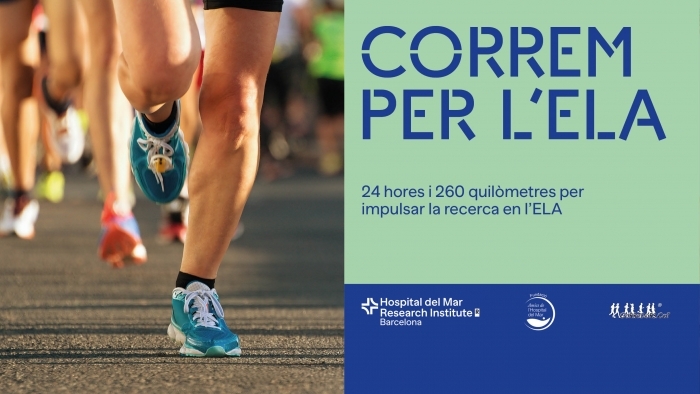
A new edition has arrived-now the 22nd-of the 24-hour track ultramarathon, a sporting and solidarity initiative that will once again donate all funds raised to the Amics de l'Hospital del Mar Foundation to support research on amyotrophic lateral sclerosis (ALS). The event, organized by the association Corredors.cat, consists of a 24-hour continuous relay run, with the collective goal of completing 260 kilometers. This year, it will take place on December 13 and 14 at the Joan Serrahima Municipal Athletics Stadium in Barcelona.
As in recent editions, a team of twenty-four neurologists from Hospital del Mar will take part, joining the solidarity challenge once again. Their involvement aligns with the KMSXELA initiative, which promotes sport as a tool to raise awareness and visibility of this disease. Anyone can contribute through donations via BIZUM using code 01778. To request a donation certificate, please email amics@hospitaldelmar.or, indicating the campaign "24 Neuròlegs Hospital del Mar".
The funds raised will help boost ALS research carried out at the Hospital del Mar Research Institute and improve the quality of care for individuals and families affected by this disease.
Research and care at Hospital del Mar
Care for people diagnosed with ALS at Hospital del Mar is structured through a dedicated unit offering highly specialized, multidisciplinary follow-up. It brings together professionals from Neurology, Pulmonology, Endocrinology and Nutrition, Physical Medicine and Rehabilitation, as well as specialized nurses, occupational therapists, and psychologists. This comprehensive model places the individual and their environment at the center.
Currently, the unit supports more than fifty patients and leads several research projects in collaboration with other institutions. It is part of the ENCALS platform and the TRICALS clinical trials, and is conducting several ongoing clinical studies.
Amyotrophic lateral sclerosis is a rare and complex disease, with an incidence of approximately two cases per 100,000 inhabitants per year in Catalonia. The average life expectancy after diagnosis is three to five years, and there is no curative treatment available. For this reason, advancing research is essential to improve understanding and prognosis of the disease.